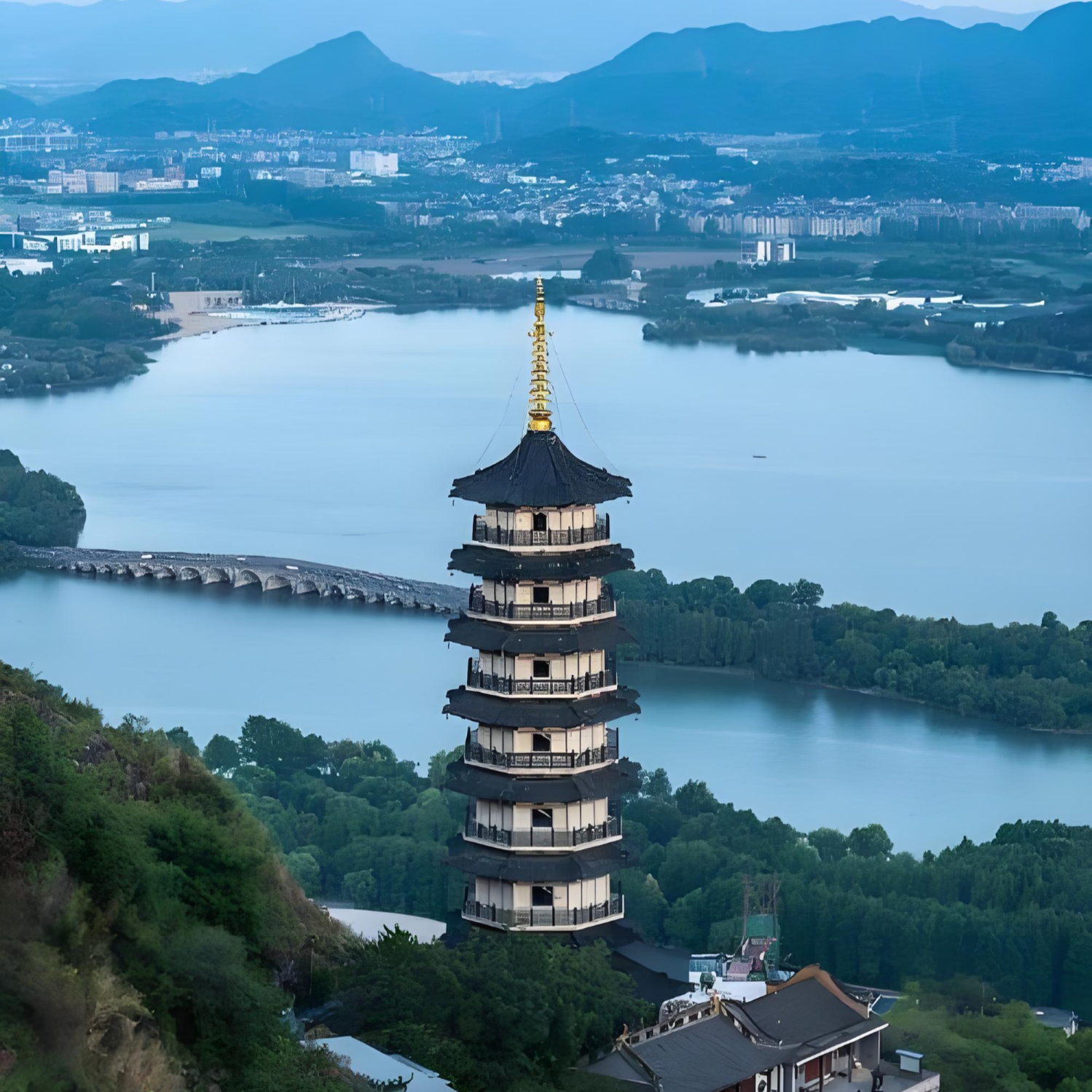


姜夔的一生行迹(1155-1221)
姜夔(约1155-约1221),字尧章,号白石道人,饶州鄱阳(今江西鄱阳)人,南宋词人、音乐家。一生布衣,往来于范成大、张鉴等名公之门,以词律兼擅著称。其词清空骚雅,开白石一派,又精通乐律,撰《大乐议》,自度曲《暗香》《疏影》等传世。
鄱阳(1155) · 鄱阳少年
宋高宗绍兴二十五年(1155年)前后,姜夔出生于饶州鄱阳(今江西鄱阳)一仕宦之家。父姜噩曾任汉阳知县,夔幼随父宦游,早孤而贫。鄱阳湖畔的少年时代,他习诗学词、谙晓音律,为日后"词律兼擅"的绝艺打下根基。
合肥(1176) · 合肥羁旅
宋孝宗淳熙三年(1176年)前后,姜夔客游合肥,在赤阑桥畔与一对善弹筝琶的歌妓相恋。合肥情事是姜夔一生最刻骨的爱情记忆,他此后二十年间反复写词忆念,合肥成为白石词中最深情的情感坐标。
湖州(1183) · 合肥羁旅
宋孝宗淳熙十年(1183年)前后,姜夔客居湖州吴兴,依诗人萧德藻而居。萧德藻赏其才华,以侄女妻之,并引荐于杨万里、范成大等文坛名流。在湖州期间,姜夔词名渐起,与萧德藻唱和切磋,白石刻律之法日趋成熟。
扬州(1186) · 杭州词客
宋孝宗淳熙十三年(1186年),姜夔过扬州,见昔日繁华都市经金兵两次洗劫后"四壁萧条",感慨万端,写下千古名作《扬州慢·淮左名都》。此词以"过春风十里,尽荠麦青青"写废墟之景,被誉为南宋爱国词的开篇之作。
苏州(1191) · 苏州依范
宋光宗绍熙二年(1191年),姜夔应范成大之邀至苏州石湖别墅作客。除夕之夜,范成大赠歌妓小红,姜夔携之归吴兴,"自作新词韵最娇,小红低唱我吹箫"——白石词与歌妓传唱的关系由此可见。在苏州期间,他写下了《暗香》《疏影》等名作。
杭州(1196) · 杭州词客
宋宁宗庆元二年(1196年),姜夔客居杭州,向朝廷上《大乐议》与《琴瑟考古图》,论雅乐制度与琴律考证。虽未被采用,但展示了他在音乐学上的精深造诣。在杭州他常与张鉴等名流交游,以词律名动临安。
无锡(1202) · 晚年飘零
宋宁宗嘉泰二年(1202年)前后,姜夔游历至无锡太湖之滨,访惠山泉、寄畅园等名胜。此时他已年近半百,漂泊愈甚,无锡太湖的烟波触发了他对半生飘零的深沉感慨,写下多首怀旧伤逝之词。
武康(1210) · 晚年飘零
宋宁宗嘉定三年(1210年)前后,姜夔晚年流寓武康(今浙江德清),贫病交加。一生布衣的他晚年境况极为窘迫,"家无立锥",但仍以诗词自遣。约嘉定十四年(1221年)前后,姜夔在临安病逝,葬于钱塘门外,享年约六十六岁。
The Life Journey of Jiang Kui, the White Stone Daoist
Jiang Kui (c. 1155-1221), the 'White Stone Daoist' of Poyang, never held an office and never lacked a patron's door — Xiao Dezao, Fan Chengda, Zhang Jian. Musician and lyricist in one, he composed his own tunes: 'Yangzhou Slow' for a looted city, 'Hidden Fragrance' and 'Shadows of Plum' at Stone Lake, and that New Year's Eve boat home — 'Xiao Hong sings low, I play the flute.'
Timeline of the Journey
- 1155 · 鄱阳 — Born by Lake Poyang; orphaned early and poor, the boy followed his father's county posts and learned music nobody taught him.
- 1176 · 合肥 — At Hefei, by the Red Railing Bridge, the two sisters who played zither and pipa — twenty years of poems and tunes would come back to them. 'Light yellow willows.'
- 1183 · 湖州 — Taken in by the old poet Xiao Dezao at Huzhou, who married his niece to him and passed his name to Yang Wanli and Fan Chengda: a lifetime's ladder built by one reader.
- 1186 · 扬州 — Passing Yangzhou, twice sacked by the Jin, 'four walls silent': the 'Yangzhou Slow' he composed to his own tune — 'after ten li of spring wind, all is green wheat.'
- 1191 · 苏州 — New Year's Eve at Fan Chengda's Stone Lake: 'Hidden Fragrance' and 'Plum Shadows' written overnight; Fan gave him Xiao Hong, and the boat went home singing. 'Crossing Rainbow Bridge.'
- 1196 · 杭州 — To Hangzhou and the court with his 'Grand Discussion of Music' and studies of pitch-pipes — unadopted, but the music theory survives in his book.
- 1202 · 无锡 — By Lake Tai at Wuxi past fifty — Hui Shan's spring, the drift widening: 'Changting Yuanman,' long distances, slow sorrows.
- 1210 · 武康 — His last lodging at Wukang, sick and 'without a pin to stand on' — the crickets poem still perfect — the barefoot master dead about 1221, buried by friends.
'When the sandals' straps are not too soft to wear — I'll lean on the red railing again with that old crazy man.' Jiang Kui tuned his own griefs and set them: the White Stone line — clear air, cold jade — has never once gone out of style.


